
Summary first:
-
THCA live resin diamonds are crystalline cannabinoid structures formed when concentrated extract is cooled and purified under controlled pressure and temperature conditions.
-
These crystals typically carry a much higher cannabinoid concentration than flower, badder, or sugar-style concentrates, though actual potency depends on lab testing.
-
Federal hemp rules affecting THCA are changing, so current product legality depends on dry-weight THC calculations and state law.
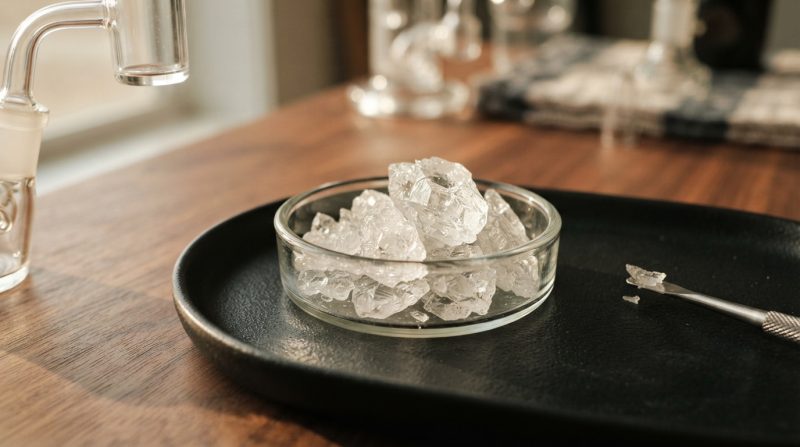
THCA live resin diamonds get their name from their appearance: clear, faceted crystal structures that form when cannabinoid-rich extract is purified and allowed to crystallize over time. These structures are not decorative or incidental; they represent one of the most concentrated forms of tetrahydrocannabinolic acid (THCA) found in cannabis concentrates today.
Shoppers who want to explore crystalline THCA extracts from Costa Brand will find that the format sits at the top tier of the concentrate lineup, distinct from softer textures like badder or sugar. Understanding how these crystals form, and what separates them from other extract types, helps explain why they test at such high purity levels and why effects can differ from flower or vape products.
How THCA Crystals Form
THCA diamonds do not appear instantly. The process depends on manipulating a saturated cannabinoid solution until pure THCA molecules separate out and organize into a repeating crystal lattice.
-
Extract is first refined from fresh-frozen or cured cannabis material to concentrate cannabinoids and terpenes.
-
The concentrate is placed under controlled temperature and pressure, allowing dissolved THCA to reach a saturation point.
-
Over days or weeks, THCA molecules separate from the surrounding liquid and arrange into crystalline structures, a process sometimes called diamond mining.
-
The remaining terpene-rich liquid, often called sauce, can be kept alongside the crystals or separated out entirely.
Patent documentation filed with the U.S. Patent and Trademark Office describes this in technical terms, noting that cannabinoid crystallization typically relies on forming a seed crystal and then growing it inside a supersaturated solution as solvent evaporates. This mirrors how pharmaceutical compounds are sometimes crystallized to improve stability and purity.
What Makes Live Resin Diamonds Different From Other Concentrates
Not all THCA concentrates are built the same way, and the starting material affects both texture and terpene content. Live resin products begin with fresh-frozen plant material rather than dried and cured flower, which helps preserve a wider terpene range during extraction.
|
Concentrate Type |
Texture |
Typical THCA Purity |
Terpene Content |
|---|---|---|---|
|
THCA Live Resin Diamonds |
Hard, crystalline |
Often 90% or higher |
Low in the crystal itself; higher if sauce is retained |
|
THCA Live Resin Badder |
Soft, creamy, wax-like |
Moderate, full-spectrum |
Higher, full-spectrum flavor |
|
THCA Live Resin Sugar |
Moist, granular |
Between diamonds and badder |
Moderate |
This distinction matters for anyone comparing options. A full-spectrum concentrate like badder retains more of the original plant’s terpene profile, while diamonds isolate the cannabinoid itself, often leaving behind a liquid high in aromatic compounds that may or may not be reintroduced before sale.
Why Purity Levels and Effects Vary
Reported potency for THCA diamonds commonly falls in a high range, with industry sources noting that pure crystals can test close to or above 95 percent THCA content. Because THCA converts to intoxicating THC only after decarboxylation through heat, the compound in its raw crystalline form behaves differently than it does once dabbed, vaporized, or otherwise heated.
Several factors shape the resulting experience:
- Purity level of the crystal batch, which third-party lab testing can confirm.
- Whether terpene sauce has been reintroduced, since terpenes influence aroma and may affect the subjective quality of effects.
- Heating method and temperature, since low-temperature dabbing is generally associated with better preservation of flavor compounds compared to high-heat combustion.
- Individual tolerance, since cannabinoid response varies by person and prior experience.
Federal rules governing THCA products have also shifted. Recent legislation redefines hemp to count THCA toward the total THC threshold used to determine legal status, a change tracked in detail by Forbes coverage of the new hemp law. Consumers in the USA should check current product labeling and third-party lab results, since compliance standards for hemp-derived cannabinoids continue to evolve.
Frequently Asked Questions
Are THCA diamonds the same as THC? No. THCA is the acidic precursor to THC and does not produce the same intoxicating effect until it is decarboxylated through heat, such as during dabbing or vaporizing.
How should THCA diamonds be consumed? Most sources describe dabbing with a quartz banger, an electronic dab device, or a concentrate vaporizer as the common methods, with lower temperatures generally preserving more flavor.
Why are diamonds more potent than other concentrate textures? The crystallization process isolates THCA from most other plant compounds, concentrating the cannabinoid itself rather than retaining a full-spectrum mix of terpenes and secondary cannabinoids found in badder or sugar.
Is THCA legal everywhere in the USA? Legal status depends on dry-weight THC calculations and state-level rules, which have been affected by recent federal hemp legislation, so checking current lab documentation and local regulations is advisable.
Product Information
Costa Brand is a hemp-derived product retailer whose online catalog includes THCA flower, pre-rolls, vapes, and concentrates such as live resin badder, sugar, and diamonds, each listed with third-party lab testing details on its Costa Brand site.
Published product details for Costa Brand are available for reference alongside current lab testing documentation.